
This post contains affiliate links.
Flour sifters are great for keeping ingredients light and lump-free, but they can quickly collect leftover flour and buildup if they are not cleaned properly. Knowing the right way to clean a flour sifter helps it work smoothly and keeps old residue from getting into your next batch of baked goods.
The good news is that cleaning a flour sifter is simple once you know what to do. Let’s walk through the best way to clean it so it stays fresh and ready for your next baking project.
How to Effectively Clean a Flour Sifter?
As a general rule, you can clean a flour sifter by tapping out loose flour, brushing the mesh with a dry pastry brush, and rinsing with warm water if buildup remains. Dry it thoroughly and turn the handle while drying so moisture does not stay trapped in the mesh or moving parts.
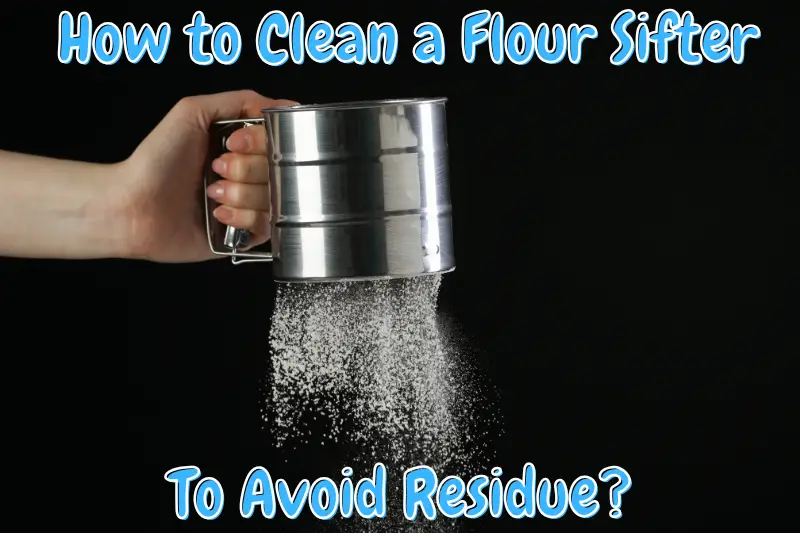
*By the way, if you’re looking for a great Sifter to break down the clumps in your dry ingredients, I found the perfect Baking Sieve Cup Stainless Steel Sifter. This sifter is great because it can sift through large amounts of dry ingredients at a much faster rate than regular handheld sifters. You can check out this Sifter Sieve Cup on Amazon!
I broke down exactly how to clean your flour sifter step-by-step here:
- Empty the sifter completely.
- Tap the sifter gently over the sink or trash can to remove any loose flour or clumps left inside.
- Brush away remaining flour.
- Use a dry pastry brush or small kitchen brush to sweep flour off the mesh screen and around the edges.
- Check the moving parts.
- Turn the handle or squeeze mechanism to loosen flour that may be trapped in the gears or rotating screen.
- Disassemble the sifter.
- If your sifter has multiple parts, take them apart and clean each one individually.
- Rinse with warm water if needed.
- If flour residue is stuck to the mesh, rinse the sifter lightly under warm running water.
- Use a soft brush for buildup.
- Gently scrub the mesh with a soft brush or toothbrush to remove stubborn flour particles.
- Shake out excess water.
- After rinsing, shake the sifter over the sink to remove as much water as possible.
- Rotate the handle while drying.
- Turn the handle several times to help release trapped moisture from the mesh and internal parts.
- Air dry completely.
- Place the sifter on a drying rack or towel and allow it to fully air dry before storing.
- Store in a dry location.
- Keep the clean, dry sifter in a cupboard or drawer to prevent moisture from causing flour residue in the future.
When Should You Clean A Flour Sifter?
As a general rule, you should clean a flour sifter after each use and whenever residue builds up. Flour dust, oils, and moisture can cling to the mesh over time. This buildup affects performance and can cause clumping, odors, or contamination during storage. Cleaning before storage helps.
“Ideally, you should clean your flour sifter after each use to prevent flour build-up.”
chefsresource.com

However, it is not always necessary to clean after each use. The main idea is not to overuse it before cleaning. As soon as you start noticing any residue buildup, it’s time to give it a good cleaning!
Note that bacteria can grow on the sifter since the flour gives it a food source. It’s important to clean it regularly to avoid contamination. Plus, a clean sifter just works better!
*By the way, I was making muffins the other day, and I realized I didn’t have flour at home. This made me think, Can I Use Pancake Mix Instead of Flour to Make Muffins? You can check out what I discovered about pancake mix in muffins in this article here!
Is A Flour Sifter Dishwasher Safe?
Generally speaking, most flour sifters are not dishwasher safe because water and heat can damage the mesh screen and internal moving parts. Simple stainless steel sifters without mechanisms may tolerate dishwashing, but many models are designed to be cleaned by hand instead.
Flour sifters can be very fragile. I’ve had so many issues with broken sifters over the years. That’s why I made the table below to break down which sifter is dishwasher safe and which isn’t.
| Flour Sifter Type | Dishwasher Safe | Hand Clean |
|---|---|---|
| Crank / Hand-Turn Sifter | Usually not recommended because water can damage the internal gears and rotating parts. | Best cleaned by tapping out flour, brushing the mesh, and lightly rinsing if needed. |
| Squeeze-Handle Sifter | Generally not dishwasher safe since water can affect the spring and moving handle mechanism. | Recommended method to protect the internal parts and keep the mechanism working smoothly. |
| Battery-Operated Sifter | Not dishwasher safe because electronics and moisture do not mix. | Must be carefully hand cleaned while avoiding the motor and battery compartment. |
| Stainless Steel Mesh Sifter (Simple Frame) | Often dishwasher safe if it has no moving parts and is made entirely of stainless steel. | Can also be hand washed and dried thoroughly after cleaning. |
| Vintage Tin Sifter | Not dishwasher safe because older metals can rust, discolor, or warp in high heat. | Should always be hand cleaned and dried quickly to prevent corrosion. |
The best tool that I’ve found to sift my flour is a Battery Operated Electric Flour Sifter For Baking. This wonderful tool automates all of my sifting needs in the kitchen! It has a 4-cup capacity and is washable. What else do you need in an automatic sifter? You can check out this Electric Flour Sifter on Amazon!
How Do You Remove Flour Lump Residue From A Sifter?
In general, remove flour lump residue from a sifter by loosening dried flour from the mesh and clearing buildup trapped in the moving parts. Residue forms when flour absorbs moisture and hardens, which can clog the screen and reduce how evenly the sifter works.
Other ways to clean a flour sifter:
- Use a toothpick: This is especially helpful when you have flour stuck in hard-to-reach areas.
- Use vinegar: Soak the sifter in a bowl of equal parts vinegar and water. Let it sit for 30 minutes before scrubbing with a soft-bristle brush. Rinse thoroughly and let it dry completely.
- A vacuum cleaner: This is another effective way to remove flour from a sifter. Place the sifter over a garbage can and hold it tightly against the rim. Turn on the vacuum cleaner and let it do its job.
- Use a compressed air device: A can of compressed air can also be used to remove flour from a sifter. Hold the sifter over the garbage can and spray the compressed air into the sifter. The flour should come right out.
You can also use a toothbrush or a toothpick to remove lumps that have been set in hard-to-reach areas.
If the residue is still stubborn, soak the sifter in a bowl of equal parts vinegar and water. Let it sit for 30 minutes before scrubbing with a soft-bristle brush. Rinse thoroughly and let it dry completely.
*By the way, I recently wrote an article about How to Aerate & Measure Flour The Right Way. This article talks about all the things you need to know to make sure you properly use flour when baking. You can check out this article here!
People also ask me…
How to Dry a Flour Sifter after Cleaning?
As a general rule, you can dry a flour sifter by removing excess water and allowing air to circulate through the mesh and moving parts. Moisture trapped in the screen or gears can cause rust or flour clumping, so thorough drying helps maintain smooth operation and cleanliness.
How to Clean Out a Battery-Powered Flour Sifter?
As a general rule, you can clean a battery-powered flour sifter by removing loose flour from the mesh and clearing residue from the interior without exposing the motor to moisture. Flour dust can collect around the screen and internal parts, which may affect performance if buildup remains.
How Do You Disinfect A Sifter?
As a general rule, you can disinfect a sifter by removing flour residue and sanitizing the mesh and frame with a food-safe cleaning solution, such as equal parts vinegar and water. Disinfection helps reduce bacteria and contaminants that may collect on surfaces during storage or repeated use.
Final Thoughts
A flour sifter is a great tool to have in the kitchen, but it’s important to keep it clean. Otherwise, you’ll end up with residue buildup and potential contamination. Follow the tips I shared in this article, and you’ll be sure to have a clean sifter that works great every time!