
This post contains affiliate links.
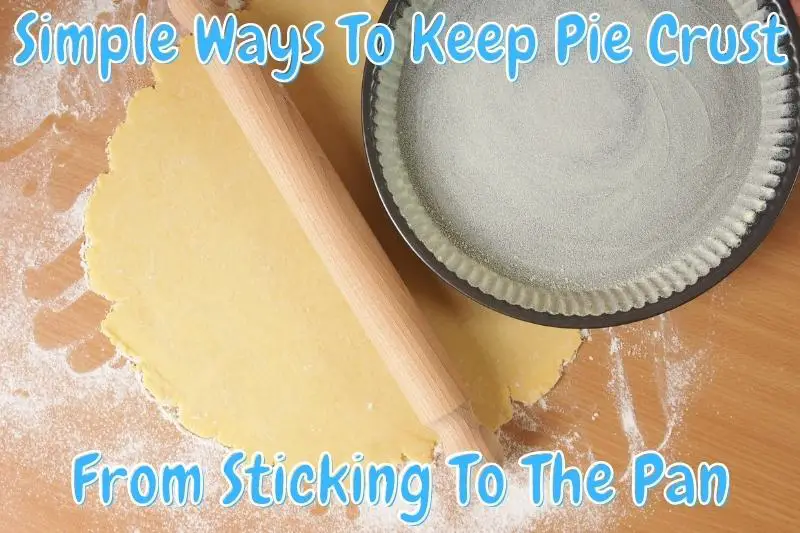
Few things are more frustrating than baking a beautiful pie only to have the crust stick to the pan. The good news is that there is a simple way to prevent this from happening and keep your crust intact.
As a general rule, the best way to prevent your pie crust from sticking to the pan is to create a light barrier between the dough and the surface by adding butter, shortening, or a nonstick coating. This reduces friction and helps the baked crust release cleanly from the pan.
Once you understand why pie crusts stick, it becomes much easier to avoid the problem. I found 5 simple ways to do this! Let’s take a quick look at what helps a crust release cleanly from the pan.
Why Does Your Pie Crust Stick To The Pan?
As a general rule, pie crust sticks to the pan when the dough bonds to the metal as it bakes. Moisture, melted fats, and sugars can act like glue against the surface. Rough or uncoated pans also increase contact, which makes the baked crust harder to release.
To bake a perfect pie, you’ll need to use a great pan. I recently came across this 9-Inch Non-Stick Aluminized Steel Pie Pan that is great for baking a pie. This pie pan is coated with a silicone called Americoat that prevents the pie from sticking. You can check out this pan on Amazon!
The most common reason why pie crusts stick to the pan is not using enough non-stick spray. Another possibility is that the pan is too hot, which causes the butter in the dough to melt too quickly.
Finally, it could be that you used too much flour when rolling out the crust, which can make it tough and difficult to work with.
5 Simple Ways To Keep Your Pie Crust From Sticking To The Pie Pan
| Method | How It Works | Best For | Key Benefit |
|---|---|---|---|
| Butter or Oil Greasing | Creates a thin fat barrier between crust and pan | Most pie types | Helps crust release cleanly |
| Baking Spray | Coats the pan evenly with nonstick layer | Quick prep baking | Fast and consistent coverage |
| Dusting with Flour | Adds a dry layer that absorbs moisture | Basic pie crusts | Simple and effective barrier |
| Parchment Paper Lining | Places a nonstick sheet between crust and pan | Delicate or sticky crusts | Prevents direct contact |
| Aluminum Foil Lining | Lines pan with a flexible barrier layer | Deep dish or heavy pies | Easy removal and cleanup |
Here are the 5 methods I use that are tried and true ways to keep your pie crust from sticking:
Use Butter or Oil To Grease The Pie Pan
Generally speaking, butter or oil can be used to prevent a pie crust from sticking to the pan by creating a thin barrier between the dough and the surface. This reduces direct contact and helps the crust release more easily once it has finished baking.
This is the easiest way to keep your pie crust from sticking. I usually just coat the bottom and sides of the pan with butter or oil before adding the dough.
This will create a barrier between the dough and the pan, and help to prevent sticking.
The advantage of using butter is that it will add flavor to the crust. The only downside is that it can make the dough hard to work with if it melts too quickly.
Add enough butter so that the dough holds together, but not so much that it melts quickly!
The advantage of using oil is that it is easier to control how much you use, and it will not affect the flavor of the crust. It is also cheap and always available. The downside is that it can make the crust less flaky.
*Side Note: I also wrote an article about 12 Creative Things To Do With Leftover Pie Crust Dough. This article breaks down how you can use your leftover pie crust dough so that it’s not a waste. You can check out this article here!
Use Baking Spray To Grease The Pie Pan
Generally speaking, baking spray can be used to prevent a pie crust from sticking to the pan by coating the surface with a thin nonstick layer. This reduces friction and limits direct contact, helping the crust release more easily after baking.
Baking spray is the easiest way to prevent your pie crust from sticking. It is a combination of oil and non-stick agents such as lecithin, which creates a non-stick barrier on the surface of the pan. I usually spray the bottom and sides of the pan before adding the dough.
You want to make sure to use just enough spray so that the dough does not stick, but not so much that it makes the crust way too greasy!
I like using this method as it never disappoints, and it is easy to control how much spray you use! The only drawback of using baking spray is the possibility of residue buildup on the pan over time.
Use Flour To Line The Pie Pan
Generally speaking, flour can help prevent a pie crust from sticking to the pan by creating a dry barrier between the dough and the surface. It reduces direct contact and absorbs moisture, which limits sticking as the crust bakes and sets.
I recently came across The Perfect-Sized Plastic Round Storage Containers that can fit anything in them from a pie to even cupcakes. These containers come in a 2-pack and are Microwave and Dishwasher safe! You can check out these containers on Amazon!
While it is not the most effective method, you can use flour to prevent the dough from sticking. I usually coat the bottom and sides of the pan with sifted flour before adding the dough.
This will create a barrier between the dough and the pan, and help to prevent sticking!
Use Parchment Paper To Line The Pie Pan
Generally speaking, parchment paper can be used to prevent a pie crust from sticking to the pan by creating a nonstick barrier between the dough and the surface. This limits direct contact and reduces the chance of the crust bonding to the pan during baking.
You can put parchment paper under the pie dough to prevent it from sticking. This is a great option if you are worried about using too much butter or oil!
“Arrange the strip inside your lightly greased pan (the grease will help the parchment stick and stay in place).”
canadianliving.com
I usually place a piece of parchment paper in the bottom of the pan, and cut off the extra pieces that are sticking out of the pan. Then just add the dough on top.
The dough will not stick to the parchment paper, and you can easily remove it after baking!
One advantage of using parchment paper is that it prevents sticking without adding any additional fat. The disadvantage is that it can be a bit tricky to work with, and you need to make sure the parchment paper is big enough to line the entire pan!
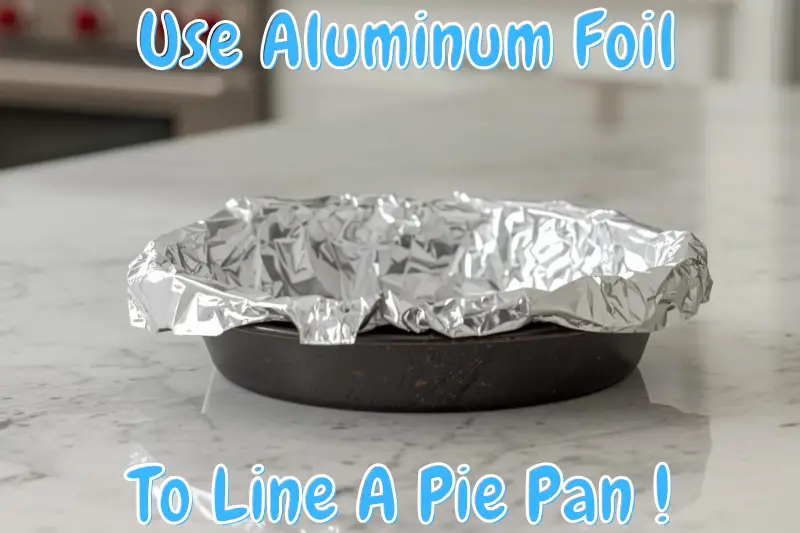
Use Aluminum Foil To Line The Pie Pan
Generally speaking, aluminum foil can be used to prevent a pie crust from sticking to the pan by acting as a physical barrier between the dough and the surface. This reduces direct contact and helps the crust lift away more easily after baking.
*By the way, I recently wrote an article about The Best Ways To Prevent A Soggy Pie Crust. This article breaks down all the ways to make sure your crust does not come out soggy after it’s baked. You can check out this article here!
Aluminum foil is another easy-to-use option for lining the pie pan. I usually place a piece of foil in the bottom of the pan, and then add the dough on top. The dough will not stick to the aluminum foil, and you can easily remove it after baking.
I find this a cheap option since aluminum foil is readily available. The foil also helps with the baking process as it conducts heat evenly. The only disadvantage of using aluminum foil is that it can increase the content of aluminum in the food.
To avoid this, you can use parchment paper or non-stick cooking spray on top of the aluminum foil to create a double layer!
How To Keep Frozen Pie Crust From Sticking To The Pan?
Generally speaking, the best way to keep a frozen pie crust from sticking to the pan is to create a thin barrier between the dough and the surface before baking. As it thaws, moisture and fats can bond to the pan, so reducing direct contact helps ensure a cleaner release.
Here’s a step-by-step process of how I do this so that my frozen pie crust never sticks to my pan:
- Prepare the pie pan.
- Lightly coat the pan with butter, oil, or nonstick spray to create a barrier before adding the crust.
- Check the frozen crust.
- Remove the crust from the packaging and make sure it is intact with no cracks or excess frost.
- Place the crust into the pan.
- Gently fit the frozen crust into the prepared pan, pressing it lightly so it sits evenly.
- Limit moisture buildup.
- Avoid letting excess ice or condensation sit between the crust and pan as it begins to thaw.
- Dock the crust if needed.
- Lightly prick the bottom to reduce bubbling that can increase contact with the pan.
- Bake at the correct temperature.
- Use steady oven heat so the crust sets properly without excess moisture forming underneath.
- Monitor during baking.
- Watch for signs of sticking around the edges and ensure even baking across the bottom.
- Cool slightly before removing.
- Allow the crust to rest so it firms up and releases more cleanly from the pan surface.
*By the way, I recently wrote an article breaking down The Best Ways To Store A Pie To Make It Last Longer. This article talks about the right way to store your pies at room temperature, in a container, in the fridge, and in the freezer. You can check out this article here!
I noticed that frozen pie crust has more of a chance to stick if it is not well-greased than regular pie crust. This is probably due to the fact that frozen crust is usually thinner than regular crust, and it contains more moisture.
If you are using a frozen pie crust, make sure to take the time to properly grease it before adding it to the pan. This will help to prevent sticking and make the process much easier.
You can also use a pan with a removable bottom, which will also help to prevent sticking and make it easier to remove the frozen crust from the pan!
Final Thoughts
With a few simple tricks, I’ve found it becomes much easier to keep my pie crust from sticking. Once I got the hang of it, I was able to lift out clean slices every time without worrying about a messy pan.
I hope the methods and tips I have shared will help you to make the perfect pie crust that comes out of the pan easily!